
Paulding County Criminal Court Records
A criminal court record is the case file kept by the court clerk after charges enter the court system. In Paulding County, felony criminal records belong in Superior Court. State Court handles misdemeanor criminal cases and traffic citations. Magistrate Court handles arrest warrants, probable-cause determinations, first appearances, and county ordinance matters, but it does not determine guilt except in county ordinance violations. Juvenile delinquency matters are not ordinary public criminal records.
The full criminal case file can include the charging document, arraignment, motions, notices, hearing entries, plea, trial events, verdict, disposition, sentence, probation order, and appeals activity. A person researching the charge itself may also need Paulding County arrest records and court charges, while a broad civil or family case search belongs with Paulding County court records. The criminal page should be read as the court file, not a jail roster.
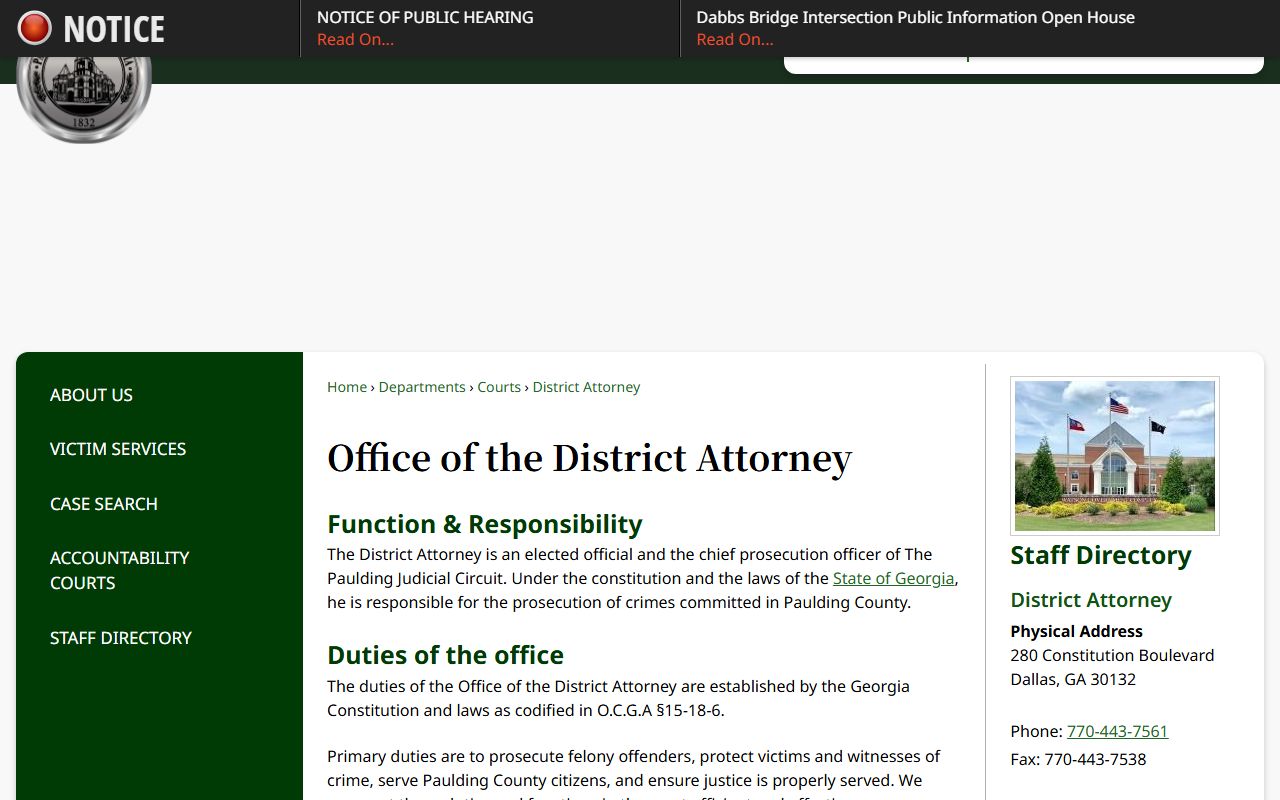
The Paulding Judicial Circuit District Attorney page identifies the DA as the chief prosecution officer for crimes committed in Paulding County.
Search Paulding County Criminal Cases
The local search route starts with the Paulding County CASE SEARCH instructions and the Clerk case-management portal linked by county pages. For criminal cases without a case number, the county instructs users to enter the last name, comma, and first name. For known criminal case numbers, the county says the number must include dashes and a total of six digits, with the example 21-CR-000001. After locating the case, the green plus sign to the left can expose pleadings where they are available.
- Identify whether the criminal matter is a Superior Court felony, State Court misdemeanor, traffic case, or Magistrate first appearance or warrant event.
- Search the county case portal by defendant name or full dashed criminal case number.
- Open the matching case and review docket entries for arraignment, motions, hearings, plea, trial, disposition, and sentence.
- Use the clerk for certified copies or older records that are not available in the public portal.
- Use the Sheriff's Records Division for arrest reports, incident reports, and proof-of-incarceration records tied to the case.
State-level criminal-history access is separate. The GBI record restriction page explains criminal-history restrictions under O.C.G.A. 35-3-37, while county court files remain tied to the court that handled the prosecution.
Paulding County Criminal Case Flow
Paulding County's District Attorney research explains that cases generally originate with an arrest by a law-enforcement agency operating in the county. A case may then be prepared for presentation to a grand jury for indictment. Indicted or otherwise charged defendants are prosecuted through jury trials, bench trials when allowed, or guilty pleas. The docket and case file record those stages as the matter moves through court.
Case flow: Charges Filed › Arraignment › Pretrial and Motions › Plea or Trial › Disposition › Sentencing
| Stage | What Happens |
|---|---|
| Charges filed | The prosecutor or grand jury moves the case into court through an accusation, complaint, or indictment. |
| Arraignment | The defendant is advised of the charge and enters a plea such as guilty, not guilty, or nolo contendere. |
| Pretrial and motions | The parties file requests, notices, discovery issues, continuances, and other pretrial matters. |
| Plea or trial | The case resolves by plea, jury trial, bench trial when allowed, dismissal, or another disposition. |
| Sentencing | The court imposes punishment after conviction, which may include confinement, probation, fines, restitution, or other terms. |
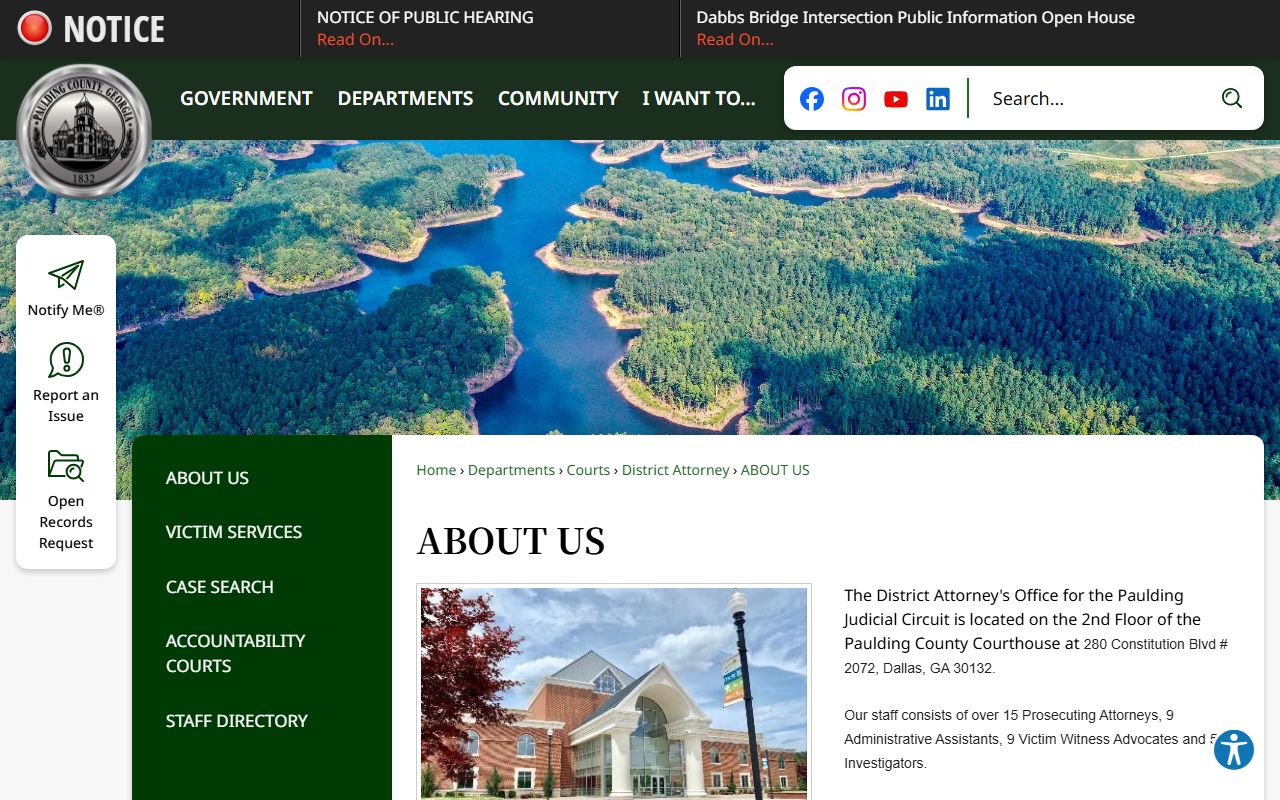
The District Attorney about page gives local detail on grand jury review, trials, pleas, staff, and prosecution priorities.
What Paulding County Criminal Records Show
A criminal court record is more than a list of charges. It is the court's file for the prosecution. A felony record in Superior Court may show the indictment or accusation, arraignment, pretrial motions, hearing notices, plea entries, verdict, disposition, sentence, probation order, and appeal notices. A misdemeanor record in State Court may show accusation data, plea, fines, sentence, probation, and traffic-related details when the case involves a citation.
| Field | What It Shows |
|---|---|
| Case number | The local case identifier, including dashed criminal formats such as 21-CR-000001. |
| Defendant | The person charged in the criminal case. |
| Court | Superior Court for felonies, State Court for misdemeanors and many traffic matters, or another court if shown. |
| Charges | Charge text, count, code or statute reference where posted, severity, and charging document. |
| Plea | The defendant's response, such as guilty, not guilty, or nolo contendere. |
| Disposition | The final outcome of each charge or the case, such as guilty, dismissed, acquitted, or nolle prosequi. |
| Sentence | Confinement, probation, fines, restitution, or other terms imposed after conviction. |
| Docket entries | Hearings, motions, orders, continuances, notices, and other case events. |
Paulding Charges vs Convictions
A charge is an accusation that appears when law enforcement, a prosecutor, or a grand jury moves a criminal allegation into the court system. A conviction is a final finding of guilt by plea or verdict. Paulding County criminal court records can show charges that were amended, reduced, dismissed, dead docketed, or resolved without conviction. Reading only the first charge line can give the wrong picture of the case outcome.
| Charge | Conviction | |
|---|---|---|
| Meaning | An allegation filed with the court. | A finding of guilt by plea or verdict. |
| Where it appears | Charging document, docket, and case index. | Disposition, judgment, sentence, and probation entries. |
| Can change | Yes, it can be amended, reduced, dropped, or dismissed. | Changes usually require later court action, appeal, or post-conviction relief. |
| Public impact | May appear while the case is pending. | Often appears in final court and criminal-history records. |
Public Criminal Record Access
Georgia law and court rules generally make court records public unless access is limited by statute, court order, or procedure. The Georgia Open Records Act covers public agency records. Uniform Superior Court Rule 21 addresses public access to court files. Criminal court records may still have redactions for Social Security numbers, financial account numbers, protected health information, minor identities, victim information, and sensitive law-enforcement details.
For incident reports, arrest reports, and accident reports connected to a criminal case, the Sheriff's open-records route applies. The Sheriff's records page gives a Records Division address, public records process, and cost rules. For court pleadings and certified dispositions, the Clerk of Superior Court or Clerk of State Court is the better source. The same event can create more than one public record, so the request has to match the document type.
Key access point: Court files, arrest reports, and statewide criminal-history records are related, but they are not the same record.
DA and Public Defender Contacts
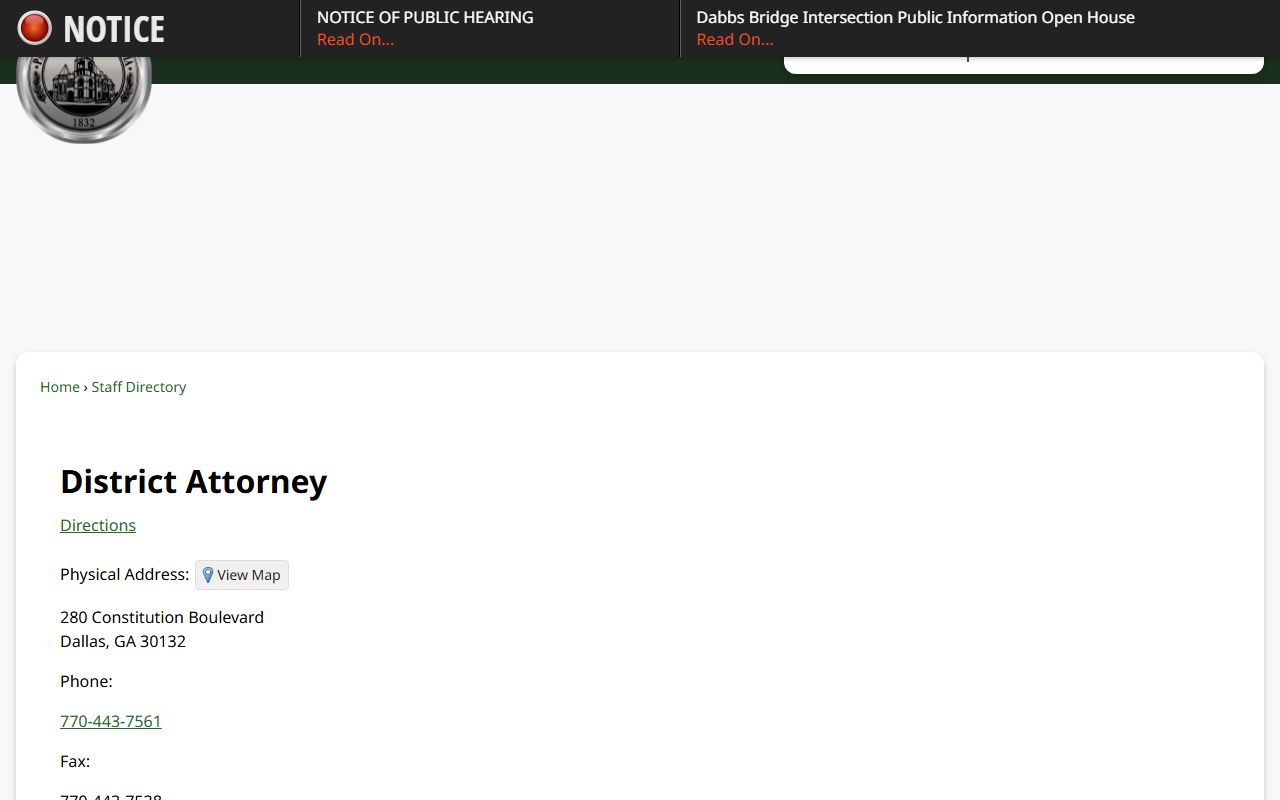
The Paulding Judicial Circuit District Attorney prosecutes crimes committed in Paulding County. The official DA page cites O.C.G.A. 15-18-6 for the office's duties and lists divisions that include Superior Court, Accountability Courts, Appellate Court, Crimes Against Women Unit, Drug Task Force Unit, Juvenile Court, Magistrate Court, Probate Court, and Victim Services. The DA directory lists the office at 280 Constitution Boulevard with phone, fax, and weekday hours.
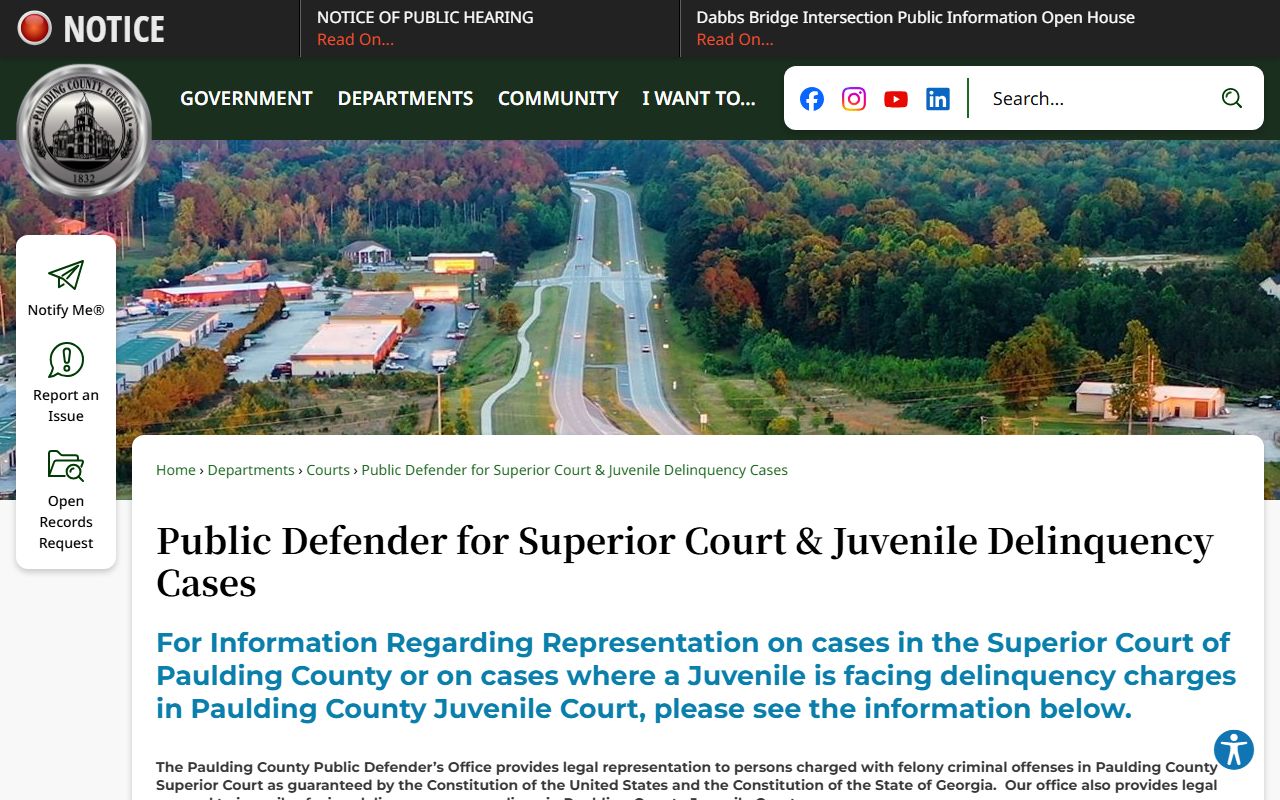
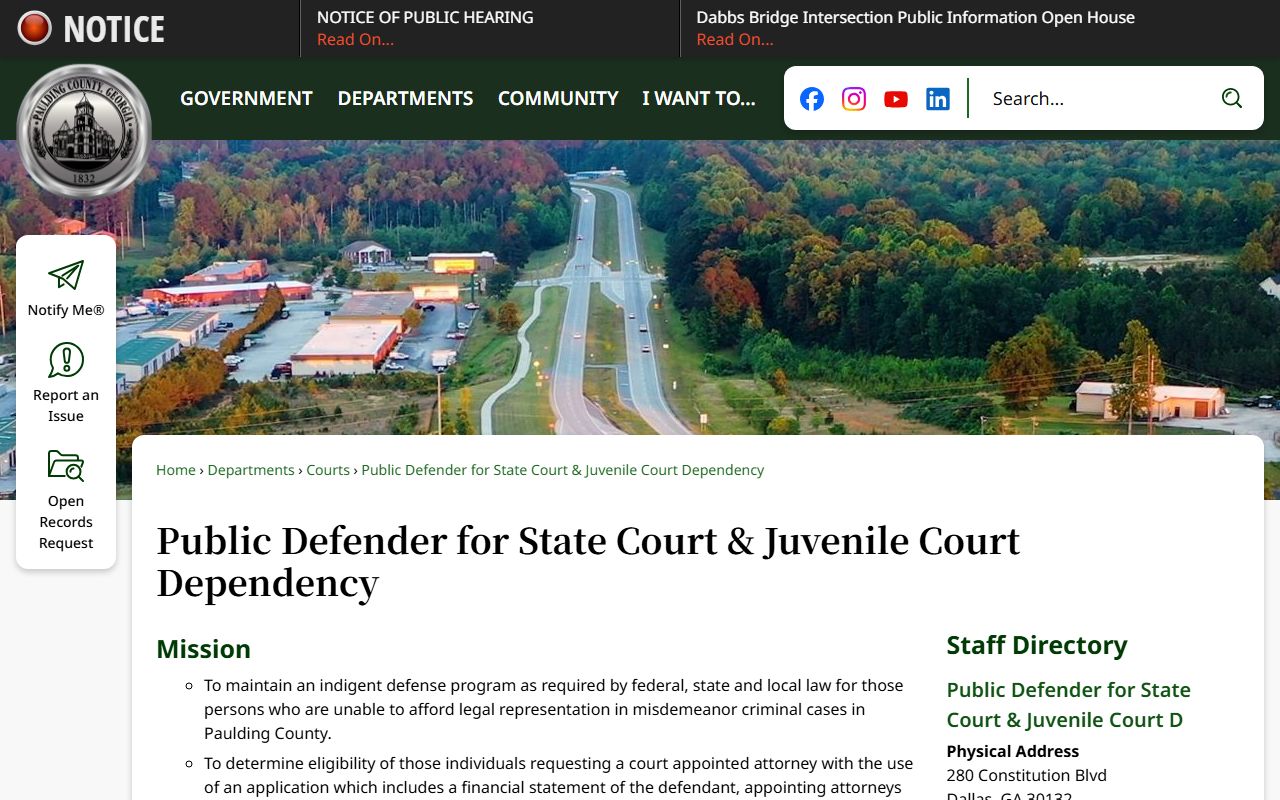
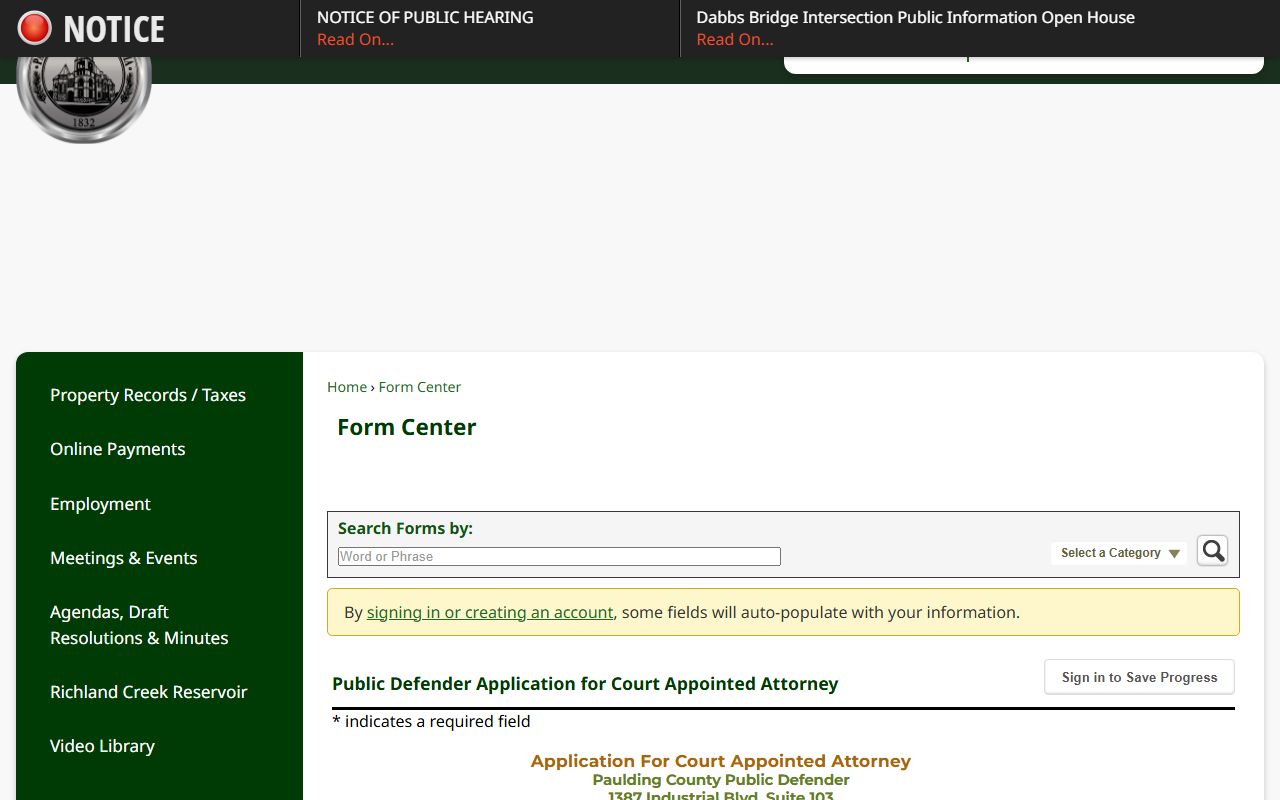
The Public Defender is relevant to criminal court records because indigent defendants may apply for appointed counsel. The Superior Court and juvenile delinquency public defender office represents people charged with felony criminal offenses in Paulding County Superior Court and juveniles facing delinquency proceedings. The office requires income verification, charges a $50 application fee per file opened, and has no public office inside the judicial building. State Court and juvenile dependency public defender services use a different county page and phone.
District Attorney
280 Constitution Boulevard, Room 2072
Dallas, GA 30132
770-443-7561
Monday-Friday, 8 a.m.-5 p.m.
Superior Court Public Defender
1387 Industrial Blvd N, Suite 103
Dallas, GA 30132
770-443-3463
Applications Monday-Friday, 8 a.m.-4 p.m.
The DA directory page provides office contact details for prosecution-related criminal court record questions.
Sealed vs Expunged Criminal Records
Georgia often uses record restriction rather than the word expungement, so Paulding County criminal court records should be read with that state term in mind. Under O.C.G.A. 35-3-37, certain criminal-history records can be restricted for non-criminal justice purposes when approved by the prosecuting attorney. For arrests after July 1, 2013, GBI says there is no application process through GBI, and the person contacts the prosecutor. For arrests before that date, the person applies with the arresting agency. Court-file sealing can require a separate order or petition in the court case.
| Sealed court record | Expunged or restricted record | |
|---|---|---|
| What changes | Public access to the court file is limited by court action or law. | Eligible criminal-history access is limited for non-criminal justice purposes. |
| Who is involved | The court that has the case file. | The arresting agency, prosecutor, and GBI process depending on date and case type. |
| Public result | The docket or documents may be hidden, redacted, or unavailable. | The criminal-history entry may be withheld from many public checks. |
| Limits | Law-enforcement and court access may remain. | Eligibility is not automatic and depends on Georgia law and approval. |
The Superior Court public defender page identifies the local application process for felony defendants who may need legal advice about restricted criminal court records.
The State Court public defender page covers misdemeanor and juvenile dependency public defender contact.
The online public defender application is a county form for court-appointed attorney requests.
Note: Juvenile criminal-type matters, sealed files, and restricted criminal-history entries should not be treated as open public criminal court records.